

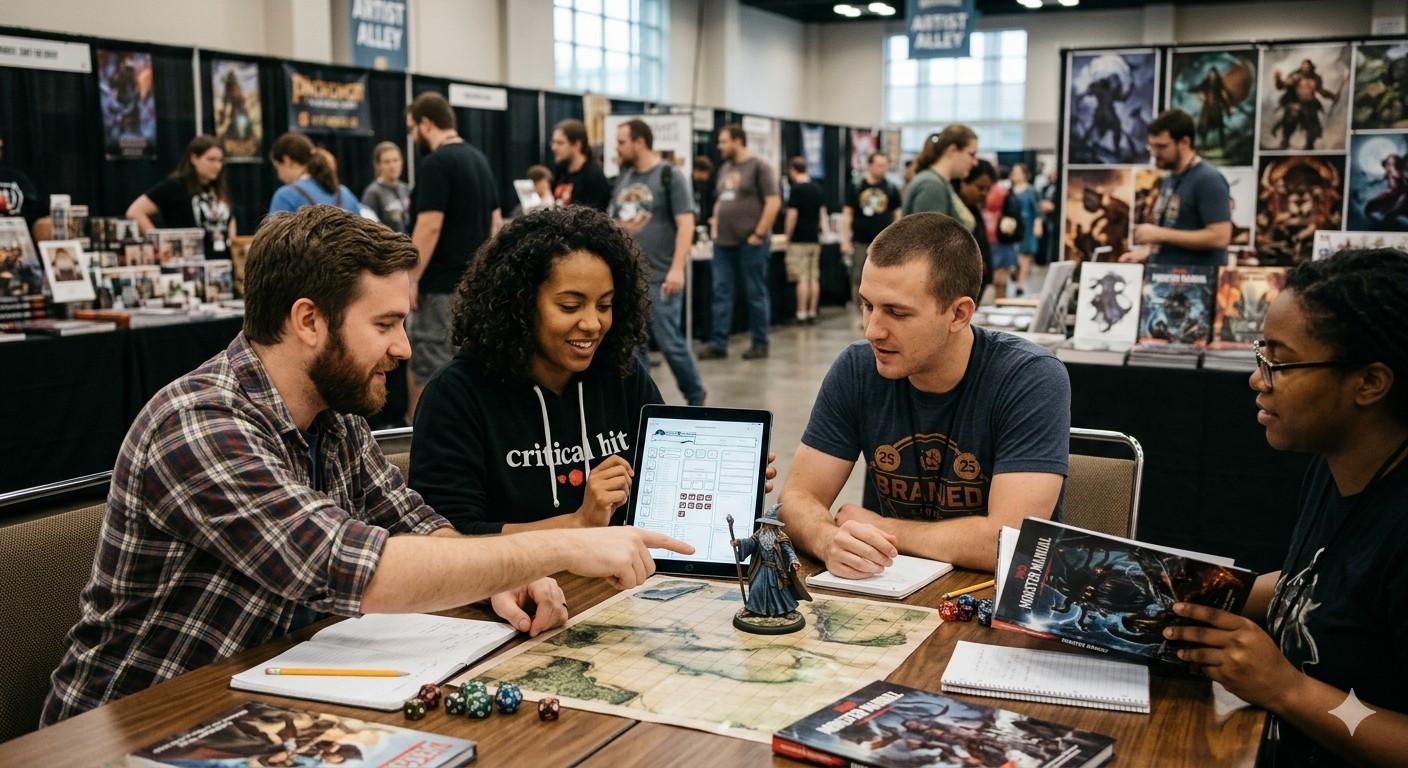
The tabletop gaming world is evolving faster than ever, and the dnd market -AI transformation is at the center of this shift. What was once a niche community of dice, paper character sheets, and in-person storytelling has now expanded into a global digital ecosystem powered by online marketplaces, virtual tabletops, and increasingly, artificial intelligence.
For players, creators, and Dungeon Masters, this change brings both opportunity and confusion. How is AI affecting Dungeons & Dragons content creation? What does the modern marketplace look like? And how can creators and businesses adapt without losing the soul of the game?
In this guide, you’ll learn how the DnD market works today, how AI is reshaping it, where opportunities are emerging, and what the future holds for players, creators, and entrepreneurs in this growing space.
Quick Answer
The dnd market -AI refers to the evolving Dungeons & Dragons ecosystem where digital marketplaces, tools, and AI-driven platforms are changing how content is created, sold, and played. AI now supports world-building, NPC generation, campaign design, and marketplace automation, making the DnD industry more accessible, scalable, and creative.
What Is the DnD Market and Why It Matters
The Dungeons & Dragons (DnD) market is no longer just about physical books and dice. It has expanded into a multi-layered digital economy that includes:
- Virtual tabletop platforms (Roll20, Foundry VTT, etc.)
- Digital asset marketplaces (adventures, maps, tokens)
- Subscription-based content platforms
- Community-driven content ecosystems
- AI-assisted campaign creation tools
Why the Market Is Growing
Several key factors are driving growth:
- Increased popularity of tabletop RPGs in mainstream culture
- Remote play adoption after global digital transformation
- Rise of content creators and streamers
- Expansion of digital marketplaces for RPG assets
- AI tools are lowering entry barriers for new creators
Today, DnD is not just a game—it’s a creative economy.
The Rise of AI in the DnD Ecosystem


Artificial intelligence has quietly become one of the most disruptive forces in the tabletop gaming world. In the context of the dnd market -ai, AI is not replacing creativity—it is enhancing it.
Where AI Is Used Today
AI tools are commonly used for:
- Generating fantasy world lore
- Creating NPC personalities and dialogue
- Designing campaign plots
- Building maps and environments
- Automating game balancing
- Assisting Dungeon Masters in real time
Why This Matters
Before AI, creating a full campaign could take weeks. Now, it can take hours. This shift allows:
- New Dungeon Masters to start faster
- Indie creators to publish more content
- Players to experience richer worlds
However, it also introduces challenges like content saturation and quality control.
How the DnD Market Works Today
The modern DnD ecosystem functions like a layered digital economy.
1. Content Creation Layer
Creator’s design:
- Campaign modules
- Character packs
- Homebrew rules
- Maps and assets
2. Marketplace Layer
These assets are sold or shared through:
- Online RPG marketplaces
- Patreon-style subscriptions
- Community platforms
3. Gameplay Layer
Players use:
- Virtual tabletops
- Discord-based campaigns
- AI-assisted tools
4. AI Integration Layer
AI enhances all layers by:
- Speeding up content production
- Personalizing gameplay experiences
- Automating repetitive DM tasks
Key Benefits of AI in the DnD Market
1. Faster Content Creation
AI dramatically reduces the time required to build campaigns, characters, and lore.
2. Lower Entry Barriers
New creators can enter the market without needing advanced writing or design skills.
3. Enhanced Creativity
AI can suggest plot twists, character arcs, and world-building ideas.
4. Scalable Marketplaces
Digital stores can now support massive content libraries without manual overhead.
5. Personalized Gameplay
Players can experience adaptive storytelling based on choices and behavior.
Challenges and Limitations of the AI-Driven DnD Market
Despite its benefits, the dnd market -ai transformation is not without concerns.
1. Over-Automation Risk
Too much AI use can make stories feel generic or repetitive.
2. Quality Control Issues
Not all AI-generated content meets storytelling standards.
3. Creator Dependency
Some creators may rely too heavily on AI instead of developing original ideas.
4. Market Saturation
More content means more competition and harder discovery.
5. Loss of Human Touch
DnD is built on storytelling emotion, which AI can struggle to replicate fully.
Best Practices for Using AI in the DnD Market
To succeed in this evolving ecosystem, creators and Dungeon Masters should follow these practices:
Blend AI With Human Creativity
Use AI for structure, but add human storytelling for depth.
Focus on Niche Content
Specialized campaigns (horror, sci-fi fantasy, etc.) perform better than generic ones.
Maintain Narrative Consistency
Always review AI output to ensure lore consistency.
Build Community Feedback Loops
Engage players to refine AI-assisted content.
Use AI as an Assistant, Not a Replacement
The best results come from collaboration between human imagination and machine efficiency.
The Future of the DnD Market and AI


The future of the dnd market -AI ecosystem is heading toward deeper immersion and automation.
1. AI Dungeon Masters
Fully interactive AI DMs that adapt storytelling in real time.
2. Procedural World-Building
Entire worlds are generated dynamically based on player actions.
3. Voice-Driven Campaigns
Players interacting with AI through natural conversation.
4. VR and AR Integration
Immersive tabletop experiences in virtual environments.
5. Marketplace Intelligence
AI helps creators optimize pricing, trends, and discoverability.
Common Mistakes in the AI-Powered DnD Market
Many creators make avoidable mistakes when using AI:
- Relying entirely on AI-generated stories
- Ignoring player feedback
- Overcomplicating campaigns
- Publishing unedited AI content
- Targeting too broad an audience
Avoiding these mistakes ensures better engagement and long-term success.
Expert Insight: Balancing Tradition and Innovation
The heart of Dungeons & Dragons has always been storytelling, imagination, and shared experiences. AI enhances these elements—but it should never replace them.
The most successful creators in the modern DnD market are those who:
- Use AI to accelerate workflow
- Preserve emotional storytelling
- Build strong player experiences
- Adapt to evolving digital ecosystems
FAQ – DnD Market AI
1. What is the dnd market -ai?
It refers to the Dungeons & Dragons ecosystem where AI tools are used to create, enhance, and manage digital RPG content and experiences.
2. How is AI used in DnD campaigns?
AI helps generate storylines, NPCs, maps, and even real-time game assistance for Dungeon Masters.
3. Does AI replace Dungeon Masters?
No. AI supports Dungeon Masters but does not replace human storytelling and decision-making.
4. Is AI-generated DnD content of good quality?
It varies. AI content is useful but often needs human editing for depth and consistency.
5. Can beginners use AI for DnD?
Yes, beginners can use AI tools to quickly build campaigns and learn storytelling basics.
6. What are the risks of AI in the DnD market?
Risks include generic content, over-reliance on automation, and reduced creative originality.
7. What is the future of AI in tabletop RPGs?
The future includes AI Dungeon Masters, immersive VR campaigns, and dynamic storytelling systems.
8. Is the DnD market still growing?
Yes, it continues to expand due to digital tools, streaming culture, and AI integration.
Conclusion
The evolution of the dnd market -AI ecosystem marks a turning point in how tabletop role-playing games are created, shared, and experienced. AI is not replacing creativity; it is amplifying it.
For creators, players, and entrepreneurs, this is the perfect time to adapt, experiment, and build within this growing digital space. Those who learn to balance AI efficiency with human storytelling will shape the future of Dungeons & Dragons for years to come.
The next era of DnD is already here, more dynamic, more accessible, and more imaginative than ever before.
