

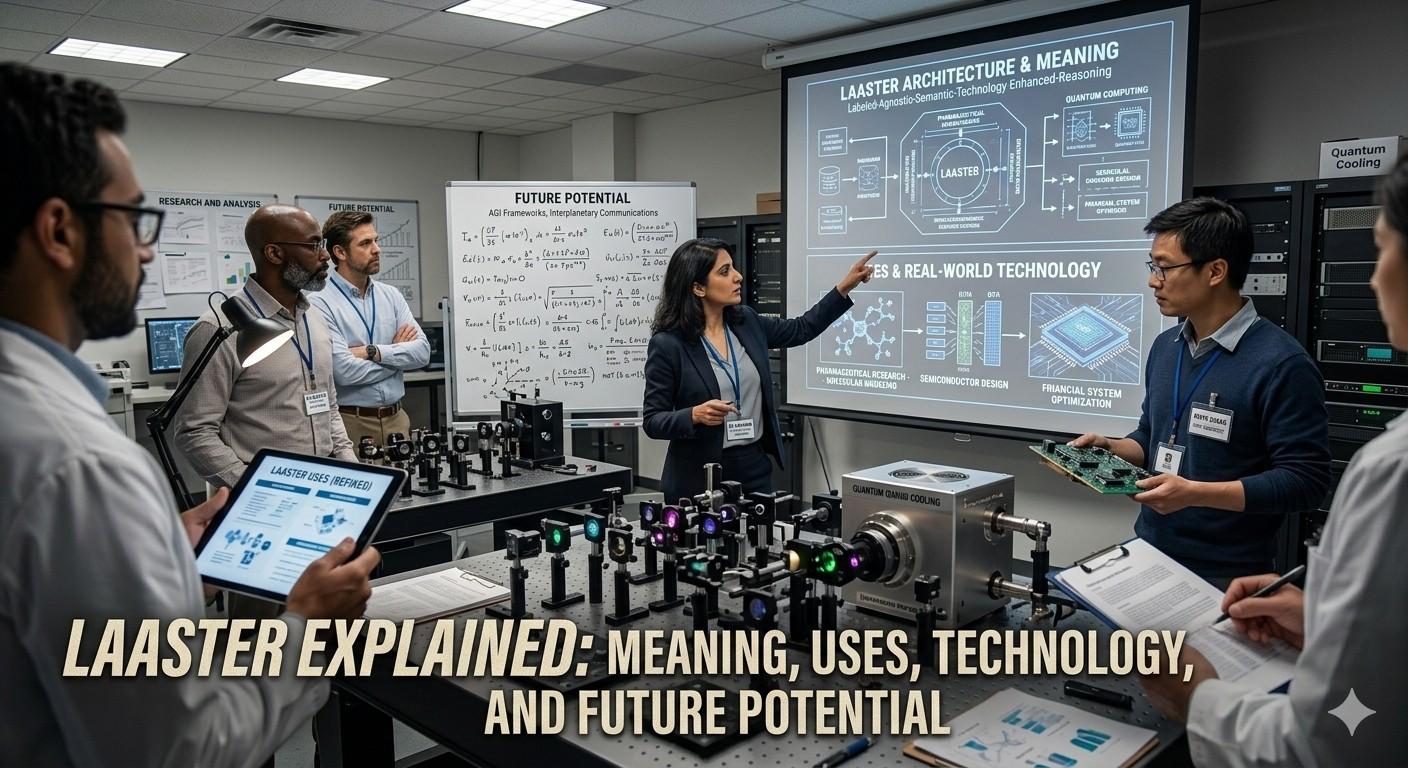
The internet regularly introduces new words that quickly spark curiosity. One term attracting growing attention is laaster. If you’ve searched for laaster, you may have noticed that different websites describe it in different ways. Some present it as a technology concept focused on speed and responsiveness, while others use it as a brand identity or digital business name.
This ambiguity creates a challenge for users: what exactly is laaster, and why is it becoming more visible online?
In this guide, you’ll learn what laaster means, where the term comes from, how it’s being used in technology and branding, its potential advantages and limitations, and why it could become more important in the future. We’ll also explore practical applications, industry trends, and expert insights that many competing articles overlook.
Quick Answer
Laaster is an emerging digital term commonly associated with low-latency technology systems, real-time responsiveness, intelligent automation, and modern branding. Unlike traditional dictionary words, laaster has no universally accepted definition, making it a flexible concept used across technology, business, marketing, and digital innovation discussions.
What Is Laaster?
At its core, laaster is a modern coined term that appears in several contexts:
- Technology and system architecture
- Digital transformation
- Branding and startup naming
- Marketing and SEO discussions
- Innovation-focused business models
Unlike established technical terms such as cloud computing or artificial intelligence, laaster does not yet have a standardized definition. Instead, it represents a collection of ideas centered around speed, adaptability, intelligence, and modern digital experiences.
Key Characteristics Often Associated With Laaster
| Characteristic | Description |
|---|---|
| Low Latency | Faster responses with minimal delay |
| Real-Time Processing | Immediate handling of data and events |
| Adaptability | Systems adjust to changing conditions |
| Automation | Reduced manual intervention |
| Scalability | Ability to grow with demand |
| User-Centric Design | Better user experiences |
The Origins of Laaster
One reason for the growing interest in laaster is that its origins remain somewhat unclear.
Several interpretations exist:
Theory 1: Technology-Inspired Creation
Some sources describe laaster as a term connected to low-latency digital architecture. The concept emphasizes reducing delays between user actions and system responses.
Theory 2: Branding Innovation
Others view Laaster primarily as a unique, memorable brand name. In today’s crowded digital landscape, businesses often create entirely new words to establish distinctive identities.
Theory 3: Linguistic Evolution
The word may also be influenced by the older term “laster,” which historically referred to a shoemaking profession or something that lasts over time. However, modern uses of laaster generally represent a separate digital-age concept.
Why Laaster Matters in Technology
Many discussions about laaster focus on technology because modern users expect instant digital experiences.
Think about:
- Video streaming
- Online gaming
- Live collaboration tools
- Financial trading platforms
- Smart devices
- AI-powered applications
Even small delays can negatively affect user satisfaction.
The Shift Toward Real-Time Systems
Traditional systems often process requests through centralized infrastructure. Modern architectures increasingly prioritize:
- Edge computing
- Event-driven systems
- Real-time data streams
- Intelligent caching
- Adaptive content delivery
These are frequently described as “laaster-style” principles because they aim to create seamless user experiences.
Core Features of Laaster-Based Systems
1. Ultra-Fast Response Times
Speed remains one of the most commonly mentioned aspects of laaster.
Users increasingly expect:
- Instant page loads
- Immediate app responses
- Real-time notifications
- Live updates
Reducing latency improves engagement and retention.
2. Context Awareness
Modern systems can adapt based on:
- Device type
- Network conditions
- User location
- Behavioral patterns
This creates more personalized experiences.
3. Intelligent Automation
Automation enables systems to:
- Scale resources automatically
- Detect issues quickly
- Route data efficiently
- Optimize performance continuously
This reduces operational complexity while improving reliability.
4. Real-Time Decision Making
Organizations increasingly rely on live data rather than delayed reporting.
Examples include:
- Fraud detection
- Supply chain monitoring
- Customer service automation
- Predictive analytics
Real-time capabilities align closely with the principles often associated with laaster.
Real-World Applications of Laaster
E-Commerce
Online stores benefit from:
- Faster checkout processes
- Personalized recommendations
- Dynamic inventory updates
Healthcare
Medical systems can use real-time data for:
- Remote patient monitoring
- Emergency alerts
- Faster diagnostics
Finance
Financial institutions require:
- Instant transaction processing
- Fraud prevention
- Market analysis
Education
Digital learning platforms use responsive systems for:
- Live classes
- Interactive content
- Real-time collaboration
Smart Cities
Connected infrastructure relies on:
- Traffic monitoring
- Energy management
- Public safety systems
These examples illustrate why concepts similar to laaster are becoming increasingly valuable.
Laaster as a Branding Strategy
One area many competitors only briefly mention is branding.
Why Unique Terms Matter
Businesses often struggle to find:
- Available domain names
- Distinctive trademarks
- Memorable company names
A unique term like laaster offers several advantages:
✅ Easy to remember
✅ Strong brand recognition
✅ Potential SEO opportunities
✅ Flexibility across industries
✅ Modern and innovative perception
Because the term is not tied to a single industry, it can be adapted for technology startups, media platforms, software products, consulting firms, and digital agencies.
Benefits of the Laaster Approach
Improved User Experience
Fast systems create smoother interactions and reduce frustration.
Better Business Performance
Research consistently shows that faster digital experiences can improve conversions and customer retention.
Greater Scalability
Modern architectures can handle growth more effectively.
Increased Innovation
Organizations can build new services around real-time data and automation.
Competitive Advantage
Companies that deliver responsive experiences often outperform slower competitors.
Potential Drawbacks and Challenges
While laaster-related concepts sound appealing, there are important considerations.
Higher Infrastructure Costs
Real-time systems often require:
- Advanced networking
- Additional computing resources
- Sophisticated monitoring
Technical Complexity
Building low-latency environments can be challenging.
Security Risks
More connected systems create additional security concerns.
Skill Requirements
Organizations need experienced developers and architects to implement advanced solutions successfully.
A balanced understanding is essential when evaluating any emerging technology approach.
Common Mistakes People Make When Understanding Laaster
Mistake #1: Assuming It Has One Fixed Meaning
Laaster remains a flexible term used in multiple contexts.
Mistake #2: Treating It as an Official Industry Standard
While discussed online, laaster is not currently recognized as a formal technology standard.
Mistake #3: Focusing Only on Speed
Speed matters, but adaptability, automation, and user experience are equally important.
Mistake #4: Ignoring Branding Value
Many businesses underestimate the SEO and branding potential of unique digital terms.
Future Trends for Laaster
Several technology trends could increase interest in laaster-like concepts:
Artificial Intelligence
AI systems increasingly require real-time decision-making.
Edge Computing
Processing data closer to users reduces latency.
Internet of Things (IoT)
Connected devices generate massive amounts of real-time data.
Automation Platforms
Businesses continue seeking smarter workflow automation.
Personalized Experiences
Consumers expect services tailored to their needs instantly.
As these trends accelerate, the ideas associated with laaster may become even more relevant.
Expert Recommendations
If you’re researching laaster for business or technology purposes:
- Focus on user experience first.
- Prioritize speed and responsiveness.
- Invest in scalable infrastructure.
- Use automation strategically.
- Monitor emerging digital trends.
- Consider branding opportunities carefully.
- Evaluate security requirements early.
Organizations that combine these practices are more likely to benefit from modern digital architectures.
Frequently Asked Questions
1. What does laaster mean?
Laaster is an emerging digital term commonly associated with low-latency systems, real-time responsiveness, automation, and modern branding concepts.
2. Is Laaster a real dictionary word?
No. Most sources describe laaster as a modern coined term rather than a traditional dictionary word.
3. Is Laaster a technology?
Not exactly. It is more accurately described as a concept, philosophy, or term associated with modern digital systems and innovation.
4. Why is Laaster becoming popular?
Its popularity comes from its flexibility, branding potential, and association with speed, innovation, and modern technology.
5. Can Laaster be used as a brand name?
Yes. Many discussions highlight its appeal as a unique and memorable brand identity.
6. How does laaster relate to low latency?
Many technology-focused articles describe Laaster as emphasizing minimal delays, real-time responsiveness, and adaptive system design.
7. Is Laaster useful for SEO?
Potentially. Unique keywords often face lower competition and can help establish strong brand visibility.
8. What industries can benefit from laaster principles?
Technology, healthcare, finance, e-commerce, education, logistics, and smart city initiatives can all benefit from faster and more adaptive systems.
Conclusion
Laaster is an emerging term that sits at the intersection of technology, branding, automation, and digital innovation. Although it does not yet have a universally accepted definition, most discussions connect laaster with real-time responsiveness, low-latency performance, intelligent automation, and modern digital experiences.
For businesses, developers, marketers, and entrepreneurs, understanding laaster means understanding where digital systems are heading: toward faster, smarter, and more adaptive interactions. As AI, edge computing, and automation continue to evolve, the concepts associated with laaster are likely to become even more relevant.
If you’re exploring modern technology trends or building a future-focused digital brand, now is a good time to keep a close eye on Laaster and its growing role in the digital landscape.
